Great brand storytelling isn’t just about what a brand says. It’s about when it says it, where audiences experience it, how messages are delivered and, most importantly, why they matter. These themes emerged across several talks recently at ProManchester’s Creative Conference, covering everything from workplace design and AI to innovation, talent and culture.
While the discussions spanned different industries, they all pointed back to the same challenge facing modern organisations: how do you create stories, experiences and communications that people actually remember?
Here are five lessons brands can take from the event…
5 lessons on how to make brand storytelling memorable
1. What they say
It takes a certain kind of person to attend a networking event. And I’m not even sure there’s a phenotype to describe the individual who’s willing to go of their own volition. Jokes aside, it’s always a gamble of what – or who – or even when – you’re going to get out of these events. Perhaps the thrill is in the surprise.
While I typically pour my energies into soaking up as much information as possible, this ProManchester conference made me think less about exactly what the speakers said, and more about where, when, how and why they say it.
Because what brands say – and why they say it – has everything to do with who they are, and it’s how they shape impressions. As consumers, but also as people, we invest in a narrative – a person and their story. That’s what makes it matter. Where, when, and how it’s said is what makes it stick.
2. When they say it
Timing is everything when it comes to brand storytelling. Jill Griffiths, Professor of Digital Arts and Creative Industries at SODA, identified when to pounce in her opening keynote.
Clients: Griffiths stated that creativity is not a luxury, but instead a strategic asset that should be treated as a critical and fundamental requirement for every industry. We might not naturally expect healthcare or law to tap into creative resources, but Griffiths rightly points out that “without creativity, we cannot innovate”.
At PHA, all our disciplines – Reputation, Healthcare, Sport, Fitness, Corporate, Digital, Creative, Technology, Consumer – weave creativity throughout their approach.
Talent/staff: Talent also doesn’t always want to be restricted to a certain box or discipline. Work environments should be nurtured so that all members of staff feel comfortable sharing ideas at any time and equally ready to receive ideas with kindness.
It’s a simple sentiment, but one that helps challenge the assumption that creativity belongs solely within the arts.
3. Where they say it
A key theme covered by Alex Smith, a Partner at Sheppard Robson, was ‘The Power of Place ‘, and how buildings can be designed to nurture both talent and client responses.
Clients: In a digital world, sensory experiences are what people are looking for. While an office space has always been a ‘wow’ factor for client visits, hosting goes beyond that. Smith revealed that because 75% of emotions are generated due to smell, many offices have and should adopt a ‘signature scent’ to enhance memory evocation upon visits -a technique that can be especially effective if you have multiple offices across the country, or around the globe.
Talent/staff: But Smith also revealed that employees can be forgotten in this process, with many spending eight minutes in the lobby compared to a whole eight hours in the office. White walls and chairs with lumbar support just aren’t cutting it anymore. Many businesses are prioritising the enhancement of their wellbeing facilities, with Smith claiming that the office has become a ‘destination’ employees need to be enticed to visit, since hybrid and remote work have become more popular.
Smith also urges architects and designers to consider the needs of introverts and neurodivergent individuals, and reminded us that offices have been historically built for extroverts – open plan, no quiet zones – which could be stifling staff comfort and productivity.
4. How they say it
A topic that unsurprisingly sparked debate was originality in the age of AI.
Experts including Rachel Chesters at Start, Ben Topliss at Embryo, Lauren Somers at HGF and Jo Scott at Truth Creative discussed how AI should be viewed as a new tool that organisations are learning to use, much like Excel or PowerPoint before it.
The audience discussion, however, quickly turned to the opportunities and challenges that come with AI’s growing influence.
Clients: Because AI is everywhere, clients (and indeed consumers) are looking for honest indicators where AI was used. Transparency builds trust. Even something as simple as a watermark on AI mock-ups signals honesty. The speakers also noted that the simplest ideas are still the best received, and used a famous Steve Jobs approach to market research as an example: “I’m a bozo, so if I get it then every person will”. The key message? Simplify and think human.
Talent: An important fact about AI to remember – especially if being used for ideation – is that it shouldn’t be used to replace human creative judgement. AI uses a deep learning model (LLM), meaning its outputs are novel remixes of its inputs, which cannot replace the human experiences and perspectives that make an idea genuinely original.
Overall, aim to use AI to challenge and enhance, but never to conceive.
5. Why they say it
Ultimately, the most memorable stories are the ones with a reason behind them.
Clients: We all know that clients buy into people first. They want to understand the thinking behind the project, but they also want to know why you’re the right people to deliver it. A brand that consistently aligns with their why – their morals/values – makes them more attractive to their customers too.
And perhaps that’s the real lesson from the conference: The strongest communication isn’t necessarily the loudest, newest or most polished. It’s the communication that has a genuine reason to exist.
Talent: Everyone has a story – a reason they took the paths they did, the experiences that shaped them, and the perspectives they bring with them. That’s why diverse teams matter. Different experiences create new ways of seeing a problem, which is necessary for progress. We need to nurture environments for people to openly share their stories, and that includes protecting the resources needed to create that space and ultimately the future of the industry.
Because when we understand the why, the what becomes much easier to remember.
What this means for brand storytelling strategies today
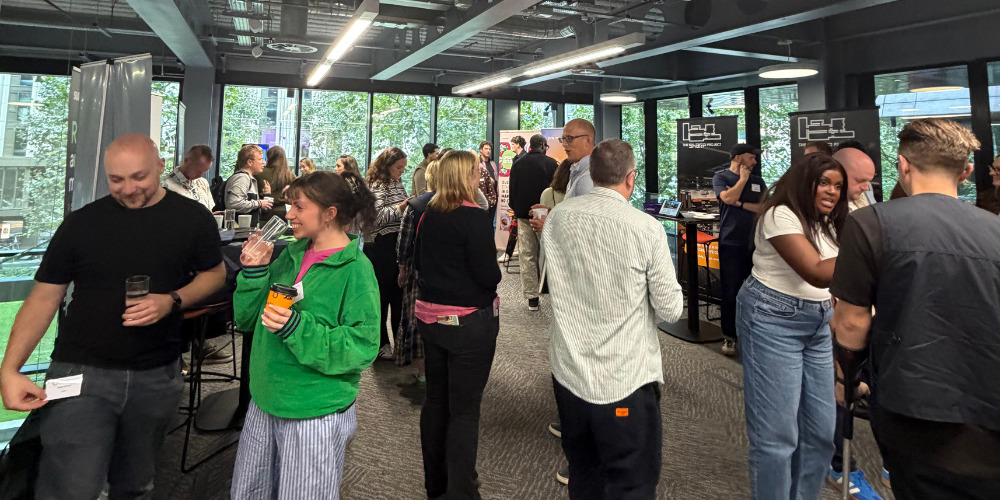
While the conference discussions covered everything from office design to artificial intelligence, the common thread was clear: memorable brands are intentional in how they communicate.
The strongest organisations don’t just think about the message. They think about the timing, the environment, the experience and the purpose behind it.
For marketers and communications teams, that means balancing creativity with strategy. It means embracing new technologies such as AI without losing the human insight that makes communication meaningful. And it means recognising that every interaction, whether it’s a campaign, a social post, a workplace experience or a customer conversation, contributes to wider brand storytelling.
At PHA, these principles sit at the heart of our approach. From reputation management and corporate communications to digital marketing and creative campaigns, we help brands tell stories that connect with the audiences who matter most.
We learned to ask what, when, where, how and why questions from an early age, but how often do we consciously carry them with us into our working lives? Perhaps we should do it more often.
Brand storytelling remains one of the most powerful tools available to brands and individuals alike. Some stories stay with us long before we’re able to explain why they matter. That’s why the stories we choose to tell, and the way we tell them, deserve careful thought and intention.
The key is knowing how you want to be remembered. Thanks to ProManchester for having us!
More from us
Memorable brand storytelling is about more than the message itself. It’s about understanding your audience, adapting to changing behaviours and creating communications that genuinely resonate.
For more insights from the PHA team, explore:
- When should you appoint a creative agency?
- Campaign identity vs brand identity: What’s the difference, and what’s the need?
- The questions you should be asking your creative marketing agency
PHA is an award-winning integrated PR, digital and creative agency that helps ambitious brands stand out for the right reasons. From corporate communications and reputation management to social media, SEO and creative campaigns, we help organisations turn complex messages into compelling stories that audiences remember.
If you’re looking to strengthen your brand story and create communications that make a lasting impact, we’d love to hear from you.
Get in touch with the team at hello@thephagroup.com to discuss how we can support your communications goals.