Social media in 2026 doesn’t feel new anymore. It feels busy. Louder. Faster. And, in many feeds, noticeably less human. Social media trends in 2026 are emerging at a time when platforms are saturated with ads, AI-generated content is everywhere, and audiences are savvier, more sceptical, and quicker to scroll on than ever before.
Grounded in our Social team’s experience across platforms, clients and campaigns, here are the eight trends shaping how smart brands are approaching 2026 on social media:
Social media trends in 2026
1. Nostalgia isn’t a gimmick – it’s a reaction

If you’ve noticed more throwbacks creeping into your feed lately, you’re not imagining it. Audiences are tired of over-optimised, over-produced content. Algorithms have trained us to consume at speed, but emotionally, people are craving familiarity.
This ten-year nostalgia cycle is clearly showing up in platform data. The hashtag #2016 has surged by more than 450% on TikTok in recent weeks, driven by music, memes and formats from that era
The brands seeing success are the ones borrowing the energy of that era and reworking it for modern platforms. It’s about cultural awareness, not cosplay. Rather than simply copying the past, they reinterpret the music, memes, and aesthetics to create content that resonates emotionally while feeling fresh and relevant.
2. Social search takes over

One of the biggest behavioural shifts we’re seeing is where people go to find things. Increasingly, that isn’t Google.
When someone wants a new pair of trainers, a skincare recommendation, or an honest opinion on a product, they’re opening TikTok or Instagram first, and, very often, Reddit soon after. In fact, Reddit has now overtaken TikTok in the UK as the 4th most visited social media site. Social platforms have become discovery engines because they offer something traditional search doesn’t: real people, real opinions, real context.
Reddit, in particular, has quietly become a trust layer. Users are actively adding “Reddit” to search terms because they want unfiltered answers, not polished brand copy. It’s not always a place for brands to broadcast, but it’s absolutely a place brands need to listen.
“Reddit operates uniquely within the social space because it’s an active research and conversation platform. The role of advertisers here isn’t to take the audience from nothingness to awareness, but instead turn awareness into interest.” says Aron Jheeta, Senior Paid Social Account Manager, at Dig & Dig. “Users take to Reddit as they’re already in-market – so for brands, the job is to steer the audience towards you in their search. Given the diverse mix of keyword, community and interest-targeting, we’re able to zone-in on potential customers, creating deeper website engagement and increased likelihood of conversions.”
SEO now lives inside social. Captions, comments, creator language and community discussion all play a role in discoverability. Brands that ignore how they show up, or are talked about, across TikTok, Instagram and Reddit risk becoming invisible at the exact moment people are searching for them.
3. Micro-influencers > Mega-influencers

Audiences are increasingly switched off from mega influencers whose lifestyles feel unattainable and whose recommendations feel transactional. There’s a growing sense that if someone has millions of followers, they’re probably being paid to say nice things.
Influencer marketing isn’t dying, but the hierarchy is changing. Micro-influencers still feel human. They’re more niche, more affordable and often more trusted because their content looks like real life rather than a polished ad. In feeds increasingly filled with AI-generated content, those genuine human voices stand out even more.
Brands are also seeing stronger results from long-term creator partnerships rather than one-off posts. Familiarity builds credibility, and credibility drives action — something scale alone can’t deliver anymore.
4. Ads that don’t feel like ads win
Ad saturation is real, particularly on platforms like TikTok, where the rise of TikTok Shop, which is predicted to exceed $20 billion in revenue in 2026, has significantly increased the number of paid placements users see in a single session.
The old model of “creator holds product and explains why it’s great” just doesn’t cut through anymore. What works is storytelling. The strongest performance comes when products are woven into content that people would watch anyway: a day-in-the-life, a list of personal annoyances, a relatable moment, a piece of humour. The product becomes secondary – almost a by-product of engaging content. If the content isn’t interesting without the product, it won’t work with it either.
Speaking on automotive client, JAECOO, Yasmin Rache, Social Creative at Dig & Dig says “For JAECOO, we built our ‘Sessions’ campaign around creators and their passions rather than the car itself. Our first film with chef The Smokin’ Elk told a Christmas story in the countryside, using the JAECOO 7 SHS’s Vehicle-to-Load function to power a festive feast. Instead of a product demo, audiences watched a moment unfold. The hero film generated over 254,000 views and nearly three days of total watch time. It showed us that when a brand becomes part of a creator’s world and story, not the headline, people stay longer and connect more deeply.”
5. Transparency, trust & the backlash against “AI slop”
Brands are already using AI to speed up content creation, test hook combinations at scale, and iterate creative faster than ever before. From a performance perspective, that speed is powerful – but the audience is catching up.
But there is a tension emerging, and audiences are increasingly vocal about their dislike of what they call “AI slop” – content that feels lazy, soulless or misleading. At the same time, engagement numbers tell a more complicated story: people still consume AI content, even when they criticise it.
2026 feels like a crossroads. As platforms begin labelling AI-generated content more clearly, brands will need to decide how transparent and how human they want to be. AI works best as an enhancer, not a replacement. The brands that protect long-term trust will be those that pair AI efficiency with genuine human insight.
6. Regulation, youth audiences, and the need to diversify
Conversations around age restrictions, online safety and AI misuse are no longer hypothetical. With countries like Australia implementing under-16 social media bans and similar discussions gaining traction in the UK, brands need to prepare for a very real shift.
For brands with educational or youth-focused audiences, this raises difficult questions. Strategies in 2026 can’t rely on a single platform or audience access remaining unchanged. Diversification matters, whether that means shifting focus to parents, educators, search, or other channels that sit outside volatile platform policies.
“For my education client STEM Learning (Science, Technology, Engineering & Maths), we need to reach young people so they can sign up directly for our mentoring programmes, and access our free exam resources”, says Robert Bone, Senior Social Media Executive at Dig & Dig. “Already on Meta and TikTok, all targeting for advertising except location is removed for those aged 13-17, reducing our ability to reach those who need our programmes most. Now, traditional social platforms are more a space to target the parents of young people, and so specific messaging and creatives need to be crafted if they are to be convincing for this secondary audience.”
“If we now want to reach young people in online digital settings, I think back to my own childhood – Club Penguin, Habbo Hotel. Spaces designed for kids only. Brands need to invest in the experiences of today such as Fortnite & Roblox, to tell their stories directly.”
7. The comeback of carousels
For years, video has been positioned as king. But behind the scenes, something interesting is happening.
Carousels are outperforming video in many cases, particularly for larger accounts. For brands with 500,000 to 1 million followers, carousels are starting to deliver stronger 28% more engagement than Reels. They’re easier to produce, easier to consume, and increasingly favoured by platform algorithms because they signal clear user interaction through swipes.
Brands are also using the format more creatively – from continuous scroll designs to collage-style storytelling – proving that high-impact content doesn’t always require high-effort production.
8. Content serialisation and consistency beats chaos
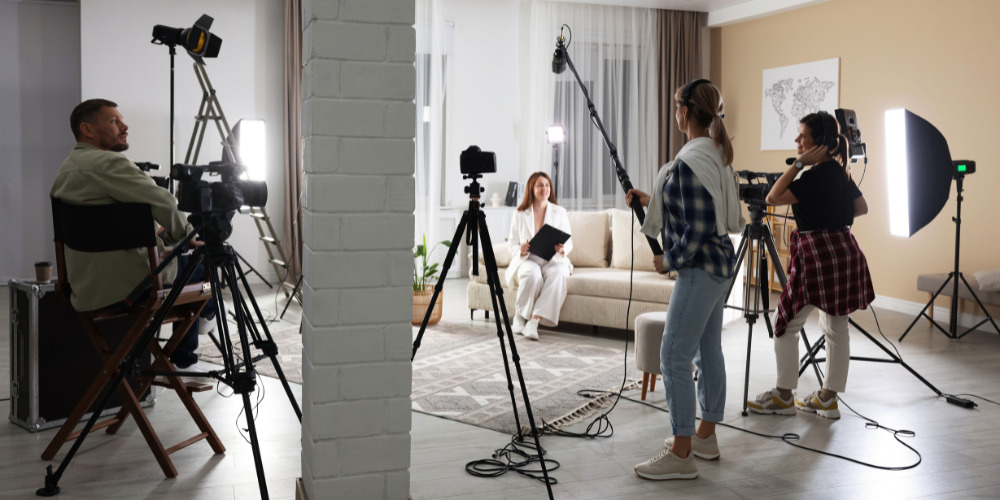
As feeds become more fragmented and competitive, audiences respond better to brands that feel familiar. One-off viral moments are exciting, but they’re not a strategy. Recurring formats, recognisable tones of voice, and serialised content create a sense of continuity that stands out.
When people know what to expect from a brand, whether that’s a weekly format, a recurring creator, or a consistent visual language, they’re more likely to stop scrolling.
We’re seeing stronger performance and recall when brands commit to repeatable ideas rather than chasing every new trend. Consistency builds memory, and memory builds trust.
What can brands do to stand out in 2026?
Taken together, the social media trends in 2026 point to a clear shift: people want social media to feel human again.
The brands that will succeed aren’t the ones jumping on every new feature or trend. They’re the ones making informed decisions grounded in platform behaviour, audience insight and performance data. They know where to show up, how to speak, and why they’re there in the first place.
More from us:
This is where our team’s award-winning expertise comes in: connecting cultural shifts to commercial outcomes, blending creativity with performance, and building social strategies designed to last.
If you’re planning what your brand’s social media should look like next year, these social media trends in 2026 offer a clear starting point. The answer isn’t doing more. It’s doing the right things, deliberately. Get started on your new strategy and start the conversation with our team of experts today at hello@thephagroup.com.
Or, continue reading and learn more about social media strategy: